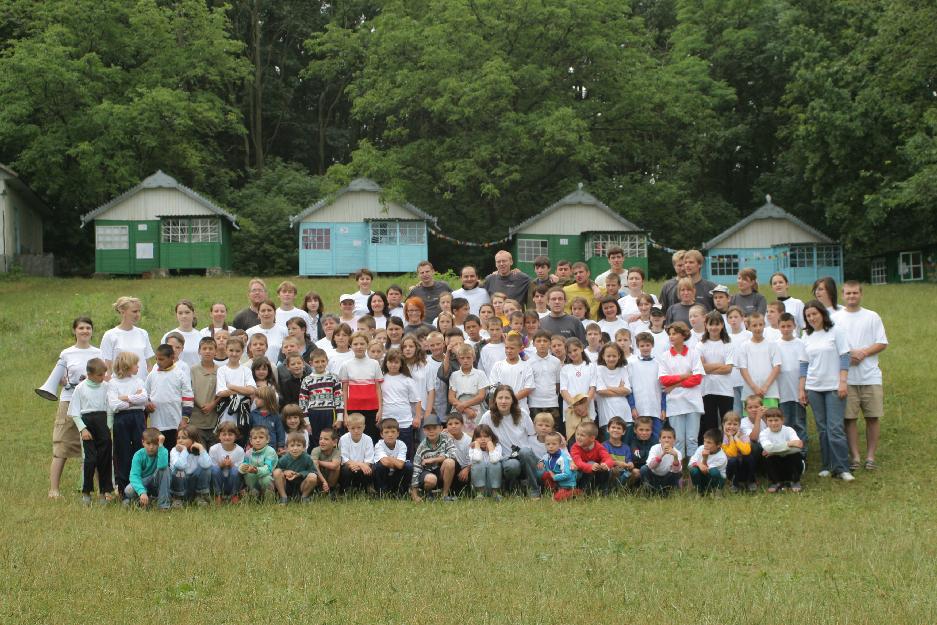
What YFC is Doing

Moldova YFC is a new ministry that has recently begun. It is excitedly and prayerfully moving forward with projects with children at risk; youth clubs; camps and orphanage support. It is also focusing on building relationships with churches, recruiting staff and volunteers.

Prayer Needs

  • Sufficient funding and resources for staff and projects.
  • Ministry contacts among churches, businesses, and individuals.
  • Continued growth of the clubs in cooperation with local churches.
  • Expansion of children-at-risk ministry models so as to serve more families in more cities.

About Moldova

Moldova

Map of Moldova

Introduction

Part of Romania during the interwar period, Moldova was incorporated into the Soviet Union at the close of World War II. Although the country has been independent from the USSR since 1991, Russian forces have remained on Moldovan territory east of the Dniester River supporting the Slavic majority population, mostly Ukrainians and Russians, who have proclaimed a "Transnistria" republic. One of the poorest nations in Europe, Moldova became the first former Soviet state to elect a Communist, Vladimir VORONIN, as its president in 2001. VORONIN served as Moldova's president until he resigned in September 2009, following the opposition's gain of a narrow majority in July parliamentary elections and the Communist Party's (PCRM) subsequent inability to attract the three-fifths of parliamentary votes required to elect a president. Moldova's four opposition parties formed a new coalition, the Alliance for European Integration (AEI), which will act as Moldova's governing coalition until new parliamentary elections can be held, possibly in summer 2010. Moldova experienced significant political uncertainty in 2009, holding two general elections (in April and July) and four presidential ballots in parliament, all of which failed to secure a president.

Geography

Location

Location: Eastern Europe, northeast of Romania
Geographic Coordinates: 47 00 N, 29 00 E

Area

Total Area: 33,851 sq km Rank: 139
Land Area: 32,891 sq km
Water Area: 960 sq km
Comparison: slightly larger than Maryland
Land Boundaries: 1,390 km
Bordering Countries: Romania 450 km, Ukraine 940 km
Coastline: 0 km (landlocked)

Climate

moderate winters, warm summers

Terrain

rolling steppe, gradual slope south to Black Sea

Elevations

Lowest Point: Dniester River 2 m
Highest Point: Dealul Balanesti 430 m

Natural Resources

lignite, phosphorites, gypsum, arable land, limestone

Land Use

Arable land: 54.52%
Permanent Crops: 8.81%
Other: 36.67% (2005)
Irrigated Land: 3,000 sq km (2003)
Renewable Water Resources: 11.7 cu km (1997)
Total Freshwater withdrawal (domestic/industrial/agricultural): 2.31 cu km/yr (10%/58%/33%)
Freshwater Withdrawal Per Capita: 549 cu m/yr (2000)

Environment

Natural Hazards: landslides
Environmental Issues: heavy use of agricultural chemicals, including banned pesticides such as DDT, has contaminated soil and groundwater; extensive soil erosion from poor farming methods
Environmental Agreements: Party to: Air Pollution, Air Pollution-Persistent Organic Pollutants, Biodiversity, Climate Change, Climate Change-Kyoto Protocol, Desertification, Endangered Species, Hazardous Wastes, Ozone Layer Protection, Ship Pollution, Wetlands

Geography Notes

landlocked; well endowed with various sedimentary rocks and minerals including sand, gravel, gypsum, and limestone

People

Population: 4,320,748 (July 2010 est.) Rank: 122

Age Structure

0-14 years: 15.9% (male 353,495/female 334,592)
15-64 years: 73.3% (male 1,536,263/female 1,629,882)
65 years and over: 10.8% (male 172,070/female 294,446) (2010 est.)
Median Age: 33.1 years

Population Growth

Growth Rate: -0.079% (2010 est.) Rank: 211
Birth Rate: 11.12 births/1,000 population (2010 est.) Rank: 177
Death Rate: 10.78 deaths/1,000 population (July 2010 est.) Rank: 46
Net Migration Rate: -1.13 migrant(s)/1,000 population (2010 est.) Rank: 121

Urbanization

Urban Population: 42% of total population (2008)
Rate of Urbanization: -1.5% annual rate of change (2005-10 est.)

Life and Death

Infant Mortality Rate: 13.13 deaths/1,000 live births Rank: 137
Life Expectancy at Birth: 70.8 years Rank: 136
Fertility Rate: 1.28 children born/woman (2010 est.) Rank: 211

Health and Disease

HIV/AIDS - Adult Prevalence Rate: 0.4% (2007 est.) Rank: 81
People living with HIV/AIDS: 8,900 (2007 est.) Rank: 109
HIV/AIDS Deaths: fewer than 100 (2007 est.) Rank: 135

Nationality and Culture

Noun: Moldovan(s)
Adjective: Moldovan
Ethnic Groups: Moldovan/Romanian 78.2%, Ukrainian 8.4%, Russian 5.8%, Gagauz 4.4%, Bulgarian 1.9%, other 1.3% (2004 census)
Note: internal disputes with ethnic Slavs in the Transnistrian region
Religion: Eastern Orthodox 98%, Jewish 1.5%, Baptist and other 0.5% (2000)
Languages: Moldovan (official, virtually the same as the Romanian language), Russian, Gagauz (a Turkish dialect)

Education

Literacy (Meaning, age 15 and over can read and write): 99.1% Male: 99.7% Female: 98.6% (2005 est.)
School life expectancy (primary to tertiary education): 12 years Male: 12 years Female: 13 years (2006)
Education expenditures: 7.6% of GDP (2006) Rank: 17

Government

Country Name

Conventional Long Form: Republic of Moldova
Conventional Short Form: Moldova
Local Long Form: Republica Moldova
Local Short Form: Moldova
Formerly: Moldavian Soviet Socialist Republic, Moldovan Soviet Socialist Republic
Government Type: republic
Capital: Chisinau (Kishinev)
note: pronounced KEE-shee-now
geographic coordinates: 47 00 N, 28 51 E

Administrative divisions

32 raions (raioane, singular - raion), 3 municipalities (municipii, singular - municipiu), 1 autonomous territorial unit (unitatea teritoriala autonoma), and 1 territorial unit (unitatea teritoriala)
raions: Anenii Noi, Basarabeasca, Briceni, Cahul, Cantemir, Calarasi, Causeni, Cimislia, Criuleni, Donduseni, Drochia, Dubasari, Edinet, Falesti, Floresti, Glodeni, Hincesti, Ialoveni, Leova, Nisporeni, Ocnita, Orhei, Rezina, Riscani, Singerei, Soldanesti, Soroca, Stefan-Voda, Straseni, Taraclia, Telenesti, Ungheni
municipalities: Balti, Bender, Chisinau
autonomous territorial unit: Gagauzia
territorial unit: Stinga Nistrului (Transnistria)
Independence: 27 August 1991 (from the Soviet Union)
National holiday: Independence Day, 27 August (1991)
Constitution: adopted 29 July 1994; effective 27 August 1994; note - replaced 1979 Soviet constitution
Legal system: based on civil law system; Constitutional Court reviews legality of legislative acts and governmental decisions of resolution; accepts many UN and Organization for Security and Cooperation in Europe (OSCE) documents; has not accepted compulsory ICJ jurisdiction
Suffrage: 18 years of age; universal

Executive Branch

Chief of State: Acting President Mihai GHIMPU (since 11 September 2009)
note: Vladimir VORONIN, president since 4 April 2001, resigned on 11 September 2009; Mihai GHIMPU, the Speaker of Parliament, is serving as acting president until new elections can be held, possibly in 2010; the parliament twice failed to elect a president in 2009 and must wait until at least late 2010 to dissolve itself and hold new presidential elections, given that the constitution forbids parliament from being dissolved more than twice in a 12-month period
head of government: Prime Minister Vladimir FILAT (since 25 September 2009); Deputy Prime Minister and Minister of Foreign Affairs and European Integration Iurie LEANCA (since 25 September 2009), Deputy Prime Minister and Minister of Economy Valeriu LAZAR (since 25 September 2009), Deputy Prime Minister Ion NEGREI (since 25 September 2009) and Deputy Prime Minister Victor OSIPOV (since 25 September 2009)
cabinet: Cabinet selected by president, subject to approval of Parliament
Elections: president elected by Parliament for a four-year term (eligible for a second term); last successful election held on 4 April 2005, most recent (failed) election held on 10 December 2009); note - prime minister designated by the president upon consultation with Parliament; within 15 days from designation, the prime minister-designate must request a vote of confidence from the Parliament regarding his/her work program and entire cabinet; prime minister designated on 17 September 2009; cabinet received a vote of confidence on 25 September 2009
Election Results: Vladimir VORONIN reelected president (2005); parliamentary votes - Vladimir VORONIN 75, Gheorghe DUCA 1; Vladimir FILAT designated prime minister; parliamentary votes of confidence - 53 of 101

Legislative Branch

unicameral Parliament or Parlamentul (101 seats; members elected on an at-large basis by popular vote to serve four-year terms)
Elections: last held on 29 July 2009 (next to be held, possibly in 2010); note - this was the second parliamentary election in less than four months; the earlier parliament (elected 5 April 2009) could not agree on a presidential candidate; the current parliament also failed to elect a president, but because of a constitutional provision that says the parliament cannot be dissolved more than once in a 12-month period, new elections will not be held at least until summer 2010
Election Results: percent of vote by party - PCRM 44.7%, PLDM 16.6%, PL 14.7%, PD 12.5%, AMN 7.4%; seats by party - PCRM 48, PLDM 18, PL 15, PD 13, AMN 7; note - counting defections that occurred in December 2009 and January 2010, the PCRM now holds 44 seats and the AMN holds 5; the 4 PCRM and 2 AMN defectors still sit in parliament, but are not allowed to establish factions; factions must be established during the first two weeks of Parliament's plenary sessions

Judicial branch

Supreme Court; Constitutional Court (the sole authority for constitutional judicature)
represented in Parliament: Communist Party of the Republic of Moldova or PCRM [Vladimir VORONIN]; Democratic Party or PD [Mihai LUPU]; Liberal Democratic Party or PLDM [Vladmir FILAT]; Liberal Party or PL [Mihai GHIMPU]; Our Moldova Alliance or AMN [Serafim URECHEAN]
not represented in Parliament: Centrist Union or UCM [Vasile TARLEV]; Christian Democratic People's Party or PPCD [Iurie ROSCA]; National Liberal Party or PNL [Vitalia PAVLICENKO]; Party for Social Democracy or PDSM [Dumitru BRAGHIS]
Political Pressure Groups and Leaders: NA
International Organization Participation: BSEC, CE, CEI, CIS, EAEC (observer), EAPC, EBRD, FAO, GCTU, GUAM, IAEA, IBRD, ICAO, ICCt (signatory), IDA, IFAD, IFC, IFRCS, ILO, IMF, IMO, Interpol, IOC, IOM, IPU, ISO (correspondent), ITU, MIGA, OIF, OPCW, OSCE, PFP, SECI, UN, UNCTAD, UNESCO, UNHCR, UNIDO, Union Latina, UNMIL, UNMIS, UNOCI, UNWTO, UPU, WCO, WFTU, WHO, WIPO, WMO, WTO
Flag Description: three equal vertical bands of blue (hoist side), yellow, and red; emblem in center of flag is of a Roman eagle of gold outlined in black with a red beak and talons carrying a yellow cross in its beak and a green olive branch in its right talons and a yellow scepter in its left talons; on its breast is a shield divided horizontally red over blue with a stylized ox head, star, rose, and crescent all in black-outlined yellow; similar color scheme to the flag of Romania - with whom Moldova shares a history and culture - but Moldova's blue band is lighter; the reverse of the flag does not display any coat of arms
Note: one of only three national flags that differ on their obverse and reverse sides - the others are Paraguay and Saudi Arabia

Economy

Economy Overview: Moldova remains one of the poorest countries in Europe despite recent progress from its small economic base. It enjoys a favorable climate and good farmland but has no major mineral deposits. As a result, the economy depends heavily on agriculture, featuring fruits, vegetables, wine, and tobacco. Moldova must import almost all of its energy supplies. Moldova's dependence on Russian energy was underscored at the end of 2005, when a Russian-owned electrical station in Moldova's separatist Transnistria region cut off power to Moldova and Russia's Gazprom cut off natural gas in disputes over pricing. In January 2009, gas supplies were cut during a dispute between Russia and Ukraine. Russia's decision to ban Moldovan wine and agricultural products, coupled with its decision to double the price Moldova paid for Russian natural gas, slowed GDP growth in 2006-07. However, in 2008 growth exceeded 7%, boosted by Russia's partial removal of the bans, solid fixed capital investment, and strong domestic demand driven by remittances from abroad. The country reversed course again in 2009, due to the onset of the global financial crisis and poor economic conditions in Moldova's main foreign markets, which dramatically decreased remittances. GDP fell about 8% in 2009. Unemployment almost doubled and inflation disappeared - at 0%, a record low. Moldova's IMF agreement expired in May 2009. In fall 2009, the IMF allocated $186 million to Moldova to cover its immediate budgetary needs, and the government signed an new agreement with the IMF in January 2010 for a program worth $574 million. Economic reforms have been slow because of corruption and strong political forces backing government controls. Nevertheless, the government's primary goal of EU integration has resulted in some market-oriented progress. The granting of EU trade preferences and increased exports to Russia will encourage higher growth rates, but the agreements are unlikely to serve as a panacea, given the extent to which export success depends on higher quality standards and other factors. The economy is making a modest recovery in 2010 but remains vulnerable to political uncertainty, weak administrative capacity, vested bureaucratic interests, higher fuel prices, poor agricultural weather, and the skepticism of foreign investors as well as the presence of an illegal separatist regime in Moldova's Transnistria region.

Gross Domestic Product

GDP (purchasing power parity): $9.956 billion (2009 est.) Rank: 148
GDP - real growth rate: -7.7% (2009 est.) Rank: 204
GDP - per capita (PPP): $2,300 (2009 est.) Rank: 179
GDP - Composition by Sector: Agriculture: 16% Industry: 19.9% Services: 64.1% (2009 est.)

Labor Force

Labor Force: 1.283 million (2009 est.) Rank: 136
Labor force - by occupation: Agriculture: 40.6% Industry: 16% Services: 43.3% (2005 est.)
Unemployment Rate: 3.1% (2009 est.) Rank: 23

Poverty

Population below poverty line: 29.5% (2005)
$1.813 billion (2008)
standard gauge: 14 km 1.435-m gauge (2008)

Transnational Issues

International Disputes: Moldova and Ukraine operate joint customs posts to monitor the transit of people and commodities through Moldova's break-away Transnistria region, which remains under OSCE supervision

Want to know more? Show Full Profile